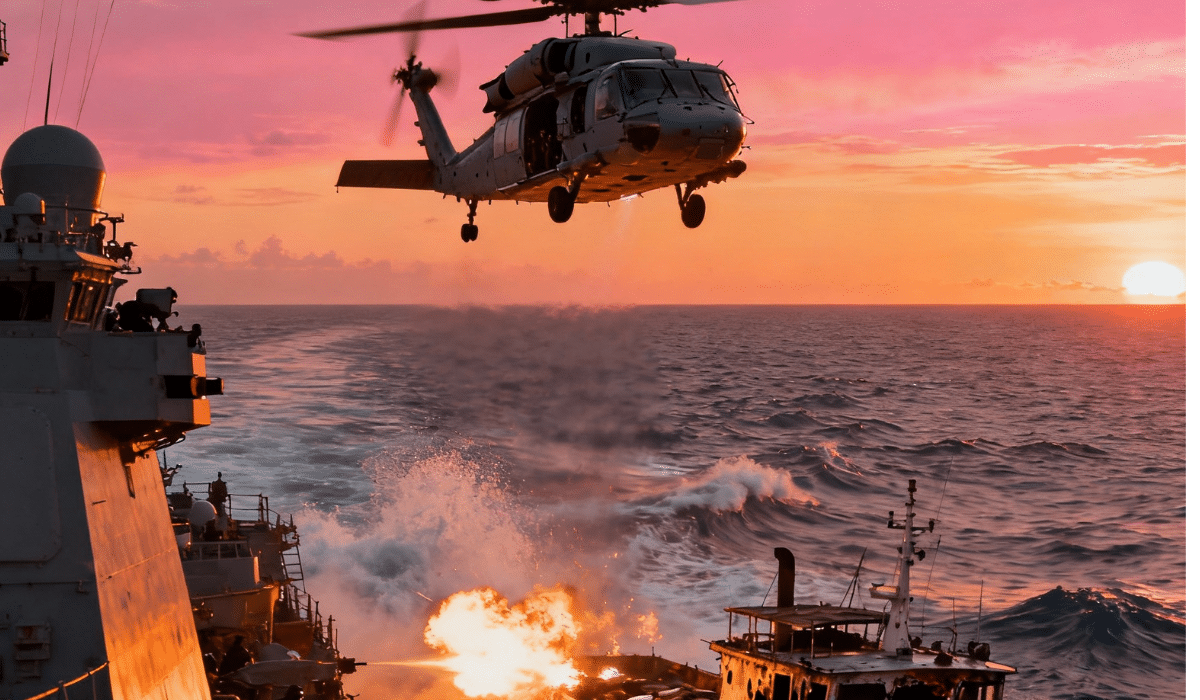
US carries out eight strikes on alleged drug boat operations, marking a significant expansion of military operations into the Pacific Ocean after targeting vessels exclusively in the Caribbean Sea since September 2025. Defense Secretary Pete Hegseth announced on Wednesday that the latest strike killed two people aboard a suspected drug trafficking vessel off the Colombian coast on Tuesday night, bringing the total death toll to at least 34 since the campaign began.
The military operation targeted the vessel in international waters approximately 200 miles off Colombia’s Pacific coast. According to Pentagon officials, the strike was conducted using precision-guided munitions from US Navy aircraft. No American personnel were harmed during the operation, which lasted approximately 15 minutes before the vessel was completely destroyed.
Pacific Operation Marks Strategic Shift
The eighth strike represents the first time military strikes Colombia have occurred in the Pacific Ocean rather than the Caribbean region. Defense Secretary Pete Hegseth confirmed that the vessel was identified through intelligence as being operated by a designated terrorist organization conducting narco-terrorism operations in international waters. The Trump drug cartel campaign has now expanded its operational theater to include Colombian waters, the world’s largest cocaine production route.
Intelligence reports suggest that the Pacific corridor has become increasingly important for cartels attempting to transport cocaine to Mexico and ultimately to the United States. The shift to Pacific operations demonstrates the administration’s commitment to disrupting these trafficking routes regardless of geographic location. Military analysts indicate that cartels have been adapting their strategies to avoid detection in the heavily monitored Caribbean Sea.
Death Toll Rises with Ninth Strike
Following the eighth strike, the US military conducted a ninth operation on October 23, killing three more people on another alleged drug trafficking vessel in the Pacific. This brings the total fatalities to at least 37 alleged drug smugglers killed across all operations since the campaign’s inception on September 1, 2025. The administration has carried out seven previous Caribbean drug smuggling interdictions in the Caribbean Sea before shifting focus to Pacific Ocean military operations.
The ninth strike occurred just hours after the eighth, suggesting intensified operational tempo in the region. Military sources indicate that multiple vessels were being tracked simultaneously, with intelligence suggesting a coordinated smuggling effort by cartel organizations. The rapid succession of strikes demonstrates what officials describe as a sustained campaign rather than isolated incidents.
Legal Framework and Controversy
President Trump formally notified Congress on October 1 that the United States is engaged in a “non-international armed conflict” with drug cartels, treating them as unlawful combatants similar to the legal framework used in the war on terrorism. Defense Secretary Pete Hegseth compared the drug cartels to Al Qaeda, stating “Just as Al Qaeda waged war on our homeland, these cartels are waging war on our border and our people.”
The administration argues that cartels meet the legal definition of terrorist organizations through their use of violence, intimidation, and destabilization tactics. Officials cite the 2001 Authorization for Use of Military Force as providing legal authority for these operations, though legal experts remain divided on this interpretation.
However, the administration has not publicly released evidence verifying the vessels were carrying drugs or that those killed were members of designated terrorist organizations. Experts have questioned the legality of the strikes under both US and international law, with some arguing that the operations violate sovereignty principles and international maritime regulations.
Survivor Released Without Charges
Unlike previous lethal operations, a strike on October 16 resulted in two survivors who were repatriated to Colombia and Ecuador. Ecuadorian authorities released their national, Andrés Fernando Tufiño, stating they had no evidence to file criminal charges against him. The Colombian survivor remains hospitalized with serious injuries sustained during the strike.
The release of survivors without charges has raised additional questions about the evidentiary standards being used to identify vessels as legitimate military targets. Human rights organizations have called for independent investigations into each strike to verify the legitimacy of the targets.
Regional Tensions Escalate
The expansion of international waters strike operations to Colombian territory has intensified diplomatic tensions between the Trump administration and Colombian President Gustavo Petro. Venezuela has accused the United States of extrajudicial murder following the Caribbean strikes, while the Colombian guerilla group National Liberation Army (ELN) denied involvement in any drug vessel after being accused by US officials.
President Trump indicated on October 22 that he plans to order strikes on land targets in addition to maritime operations. The campaign continues to expand both geographically and in scope as the administration maintains its position that the operations are legally justified under armed conflict authorities. For more breaking international news stories like this, explore our world news for comprehensive global coverage.