Introduction
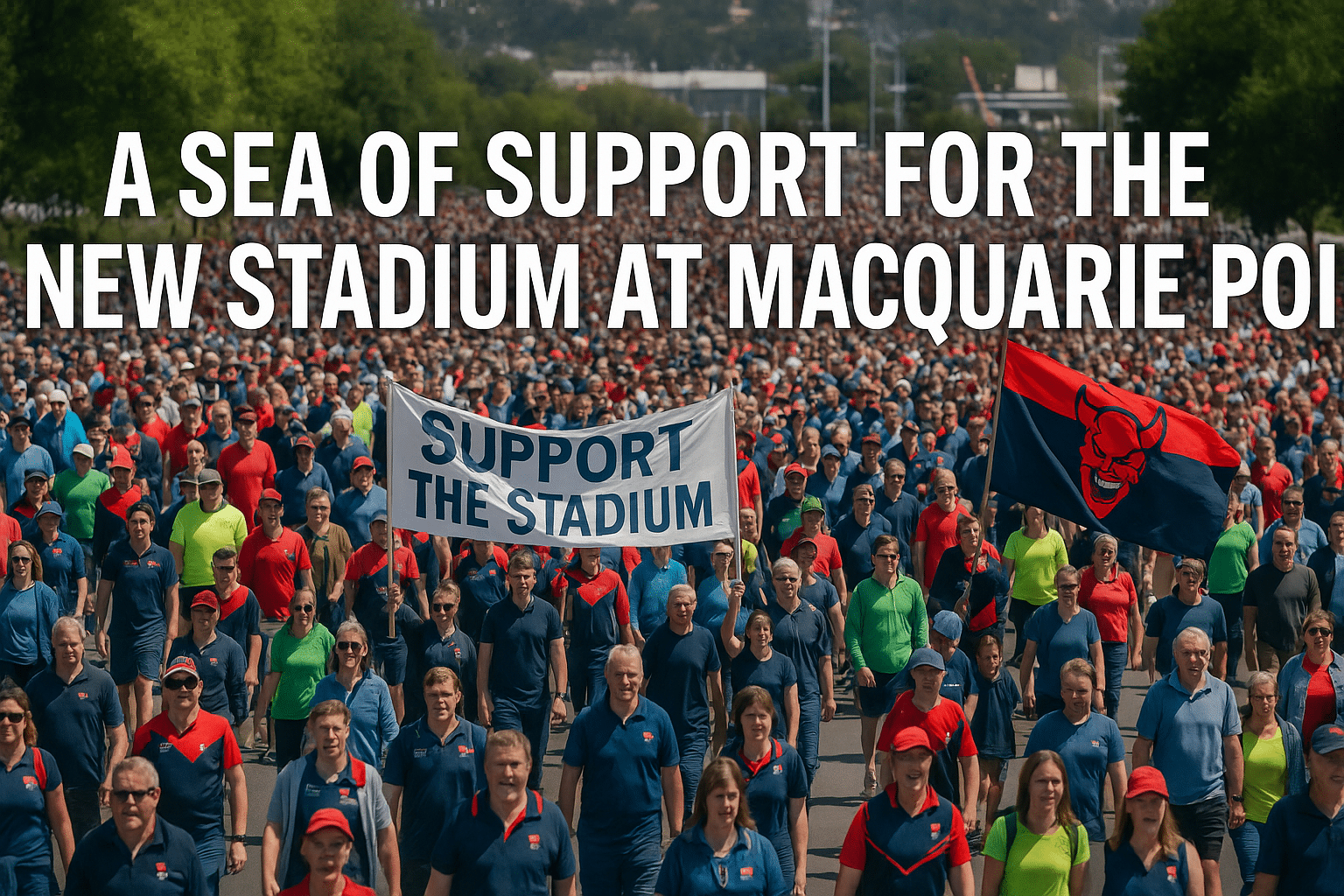
Macquarie Point stadium march witnessed thousands of Tasmanians taking to the streets in Hobart to show their support for the proposed multi-purpose stadium. Led by Mark Brown and the “Yes AFL Team – Yes Stadium” campaign, supporters marched from the TCA Ground at Queens Domain to North Hobart Oval, asserting that the “silent majority” is speaking up.
Table of Contents
1. What Sparked the March?
- Organised by Mark Brown and the grassroots group behind the Yes Stadium campaign, this rally came after months of planning.
- Despite wet weather forecast, turnout exceeded expectations. Supporters wore Tasmania AFL gear and carried banners demanding that the stadium project proceed.
2. Key Arguments from Supporters vs Critics
| Supporter Arguments | Critic Concerns |
|---|---|
| Stadium will secure Tasmania’s AFL/AFLW team, increasing local sport access. | Cost blowouts, environmental impacts, heritage concerns near the Hobart Cenotaph. |
| Economic growth and jobs from construction and events, activation of the precinct. | Doubts about stadium design, especially roofing and its impact on cricket fixtures due to shading. |
| Strong political backing from both major parties. | Public opinion polls show mixed views; many still oppose or are unconvinced. |
3. Political Dimension & Funding Landscape
- Key political leaders, including Dean Winter (Labor) and Premier Jeremy Rockliff, have publicly committed to the stadium project.
- The Tasmanian government is exploring legislation to fast-track approval, while also capping its direct financial contribution.
4. Design, Events & Use Planning
- Stadium design features include a transparent roof and a continuous concourse that improves spectator experience.
- Cricket authorities raised concerns over the roof’s shading effect on the wicket, potentially limiting cricket fixtures unless redesigns are made.
- Supporters argue that the stadium can host year-round events including concerts and major sporting matches, making it a multi-use asset.
5. What the March Means Moving Forward
- The march sends a strong political message: there is grassroots support for Macquarie Point stadium, which could influence parliamentary votes.
- Opposition groups are also active, emphasising cost, heritage impact, and integrity of planning process.
- The planning commission’s upcoming reports and parliamentary decisions are likely to be shaped by public sentiment, marches, and visible backing.
Conclusion
The Macquarie Point stadium march has underlined an important dynamic in Hobart’s ongoing stadium debate: between technical concerns and public will. While design flaws, costs, and heritage remain valid issues, the level of community mobilisation suggests strong momentum for the project. As parliament considers legislation and planning approvals, this march may prove to be a turning point in whether Macquarie Point becomes reality.
FAQs
Q1. What was the purpose of the Macquarie Point stadium march?
The Macquarie Point stadium march was organised to show public support for the proposed AFL stadium in Hobart. Thousands of Tasmanians joined the rally, led by the Yes Stadium campaign, to highlight the “silent majority” backing the project.
Q2. Who organised the march in support of the stadium?
The march was spearheaded by Mark Brown and the Yes AFL Team – Yes Stadium campaign group, which has been actively lobbying for the Macquarie Point project to move forward.
Q3. What are the main arguments in favour of the stadium?
Supporters believe the stadium will secure Tasmania’s AFL/AFLW team, create jobs, boost the economy, and revitalise Hobart’s waterfront precinct. They also argue it will host concerts and events, turning Macquarie Point into a multi-use hub.
Q4. Why do some groups oppose the Macquarie Point stadium?
Opponents raise concerns about high costs, environmental impact, and heritage issues near the Hobart Cenotaph. Cricket officials have also warned about stadium roof designs creating shading issues for pitches.
Q5. How much will the stadium cost and who is funding it?
The estimated cost runs into hundreds of millions, with funding shared between the Tasmanian Government, Federal Government, and AFL. The state has capped its spending, but debates continue over the overall financial burden.