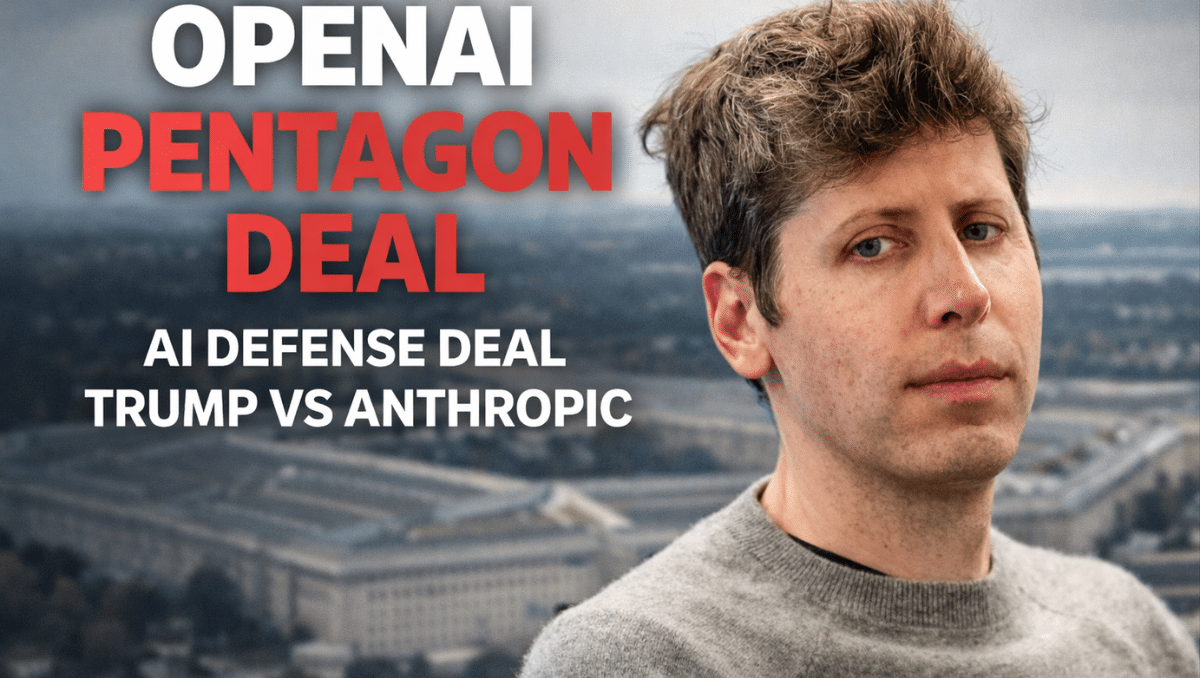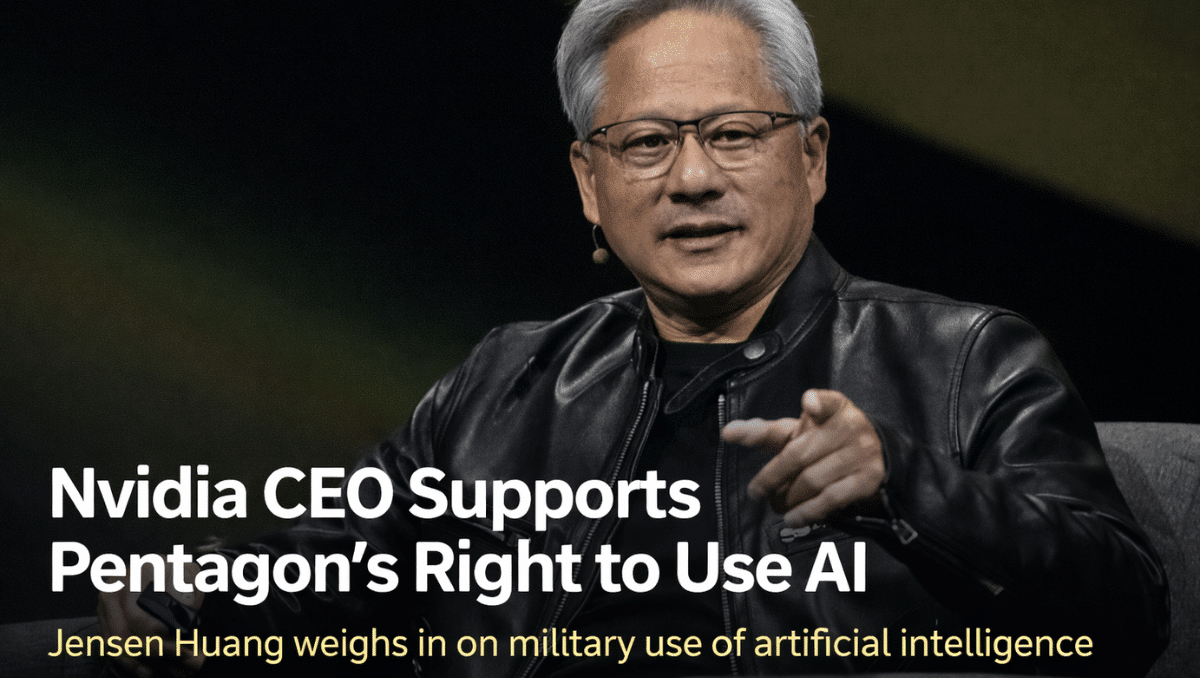
Nvidia CEO Jensen Huang has stepped directly into one of the most sensitive debates in artificial intelligence today: whether advanced AI systems should be used by the military. In comments referencing tensions around companies such as Anthropic and U.S. defense agencies, Huang made it clear that he believes the Pentagon has the right to access and deploy cutting edge technology.
The remark is more than a passing opinion. It highlights a turning point in how the world’s most powerful AI companies are positioning themselves as governments race to integrate artificial intelligence into national security strategy.
The Debate Behind Huang’s Statement
Over the past year, leading AI developers have faced scrutiny over how their systems may be used in military and intelligence contexts. Some firms have imposed restrictions or ethical guidelines that limit direct weapons applications. Others have left room for defense partnerships under specific safeguards.
Huang’s position signals a more direct alignment with national security priorities. As CEO of Nvidia, the company whose GPUs power most advanced AI models globally, his words carry weight. Nvidia does not just build chips for chatbots or enterprise automation. Its hardware underpins everything from cybersecurity systems to drone autonomy and advanced battlefield simulations.
The company’s growing influence is already evident in its market performance. Nvidia recently crossed a historic milestone as it surpassed a $3 trillion market cap amid surging AI chip demand, reinforcing how central its technology has become to both commercial and strategic sectors.
The central argument implied in Huang’s comments is straightforward: if AI is transformative, governments responsible for national defense cannot be excluded from using it.
Why This Matters Now
The timing is critical.
Governments across the United States, Europe, and Asia are accelerating AI deployment in defense systems. From real-time battlefield intelligence processing to predictive logistics modeling, AI is becoming embedded in core infrastructure.
At the same time, some researchers and policy experts warn that unrestricted military use increases the risk of autonomous weapons and faster escalation in conflicts.
Huang’s statement sides firmly with the view that access to AI is tied to sovereignty and global competitiveness.
For global readers, this signals that AI’s trajectory is no longer confined to consumer tools or enterprise productivity. It is increasingly intertwined with geopolitics and national strategy.
Nvidia’s Expanding Strategic Footprint
Nvidia’s role goes beyond chip manufacturing. The company is becoming a central node in broader technology alliances and infrastructure investments.
Its expanding ecosystem partnerships, including its reported 2025 $5 billion investment deal with Intel, show how semiconductor giants are consolidating capabilities to strengthen supply chains and computing capacity. These moves are not happening in isolation. They reflect intensifying competition to control the backbone of AI development.
Because Nvidia’s GPUs power most advanced AI training systems worldwide, its policy stance matters. When Huang supports the Pentagon’s right to access AI technology, it reinforces a broader reality: advanced computing is now a strategic asset.
Export controls, especially between major powers, have tightened. Governments increasingly treat AI hardware as part of national security infrastructure, not just commercial inventory.
The Anthropic Angle and Ethical Boundaries
Anthropic and other AI labs have positioned themselves around safety-first narratives. Yet even safety-focused companies must navigate the reality that governments are major customers and regulators.
The tension between commercial AI labs and defense agencies is not new. Silicon Valley has historically maintained a complicated relationship with military contracts. In previous years, employee protests at major tech firms reflected discomfort around defense collaborations.
Huang’s framing shifts the debate. Instead of focusing solely on whether AI should be used militarily, he reframes the issue around who decides. That subtle shift moves the discussion from internal company ethics to national policy.
This distinction is important. It suggests that decisions about military AI use may increasingly be shaped by governments rather than individual company boards.
How This Affects the Public
For most people, this debate may seem distant. But its consequences are tangible.
First, AI development priorities could tilt toward defense-driven funding. That influences where research dollars go and how rapidly certain technologies advance.
Second, geopolitical competition around AI leadership may intensify. Countries that see AI dominance as critical to military strength will compete aggressively, potentially leading to stricter export rules and fragmented global tech ecosystems.
Third, regulation could evolve quickly. Governments may introduce clearer frameworks defining acceptable military AI use and accountability structures. That will affect how companies build and deploy future systems.
In short, AI is moving beyond commercial innovation. It is becoming embedded in state power.
What to Watch Next
Several developments will shape the next phase:
- Whether major AI labs formalize or adjust restrictions on defense use
- How governments revise AI procurement and regulatory frameworks
- Whether international agreements emerge to limit autonomous weapon systems
- How semiconductor alliances and export controls evolve
Jensen Huang’s remarks do not end the debate. They clarify where one of the most influential figures in AI infrastructure stands.
The bigger shift is this: artificial intelligence is no longer just a growth story for tech companies. It is becoming central to national strategy. And that changes the stakes for everyone involved.
Source: CNBC interview/report featuring Nvidia CEO Jensen Huang discussing AI use and the Pentagon.