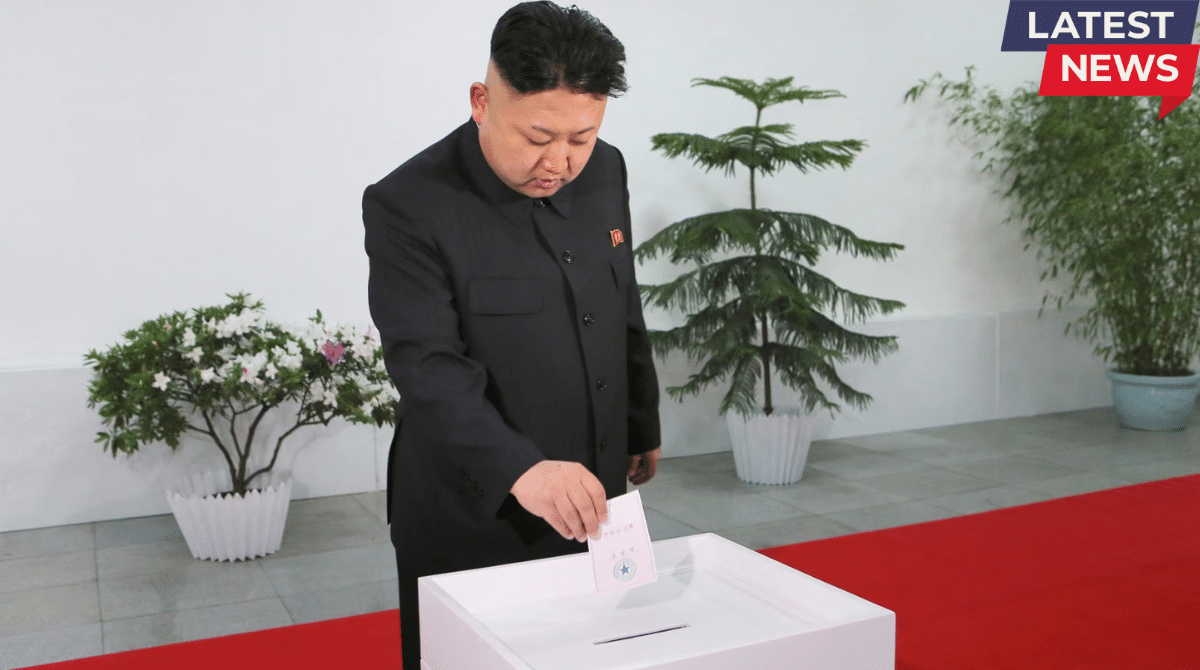
Elections are widely considered a cornerstone of democracy, but in the case of North Korea, the concept of elections operates in a completely different framework. Known officially as the Democratic People’s Republic of Korea, the country holds regular elections, yet the process, structure, and outcomes are unlike those seen in democratic nations.
This in-depth article explores how North Korea elections function, their political significance, and what they reveal about governance under the leadership of Kim Jong Un.
Key Highlights
- North Korea holds regular elections for the Supreme People’s Assembly
- Only one candidate is allowed per constituency
- The system is controlled by the Workers’ Party of Korea
- Elections serve symbolic and political purposes
- Voter turnout is reported near 100%
- The process reinforces centralized leadership
Understanding the Political System of North Korea
To understand elections in North Korea, it’s essential to first examine its political system. North Korea is a one-party state dominated by the Workers’ Party of Korea. While other minor parties exist, they are part of a controlled alliance and do not function as independent opposition forces.
What Are North Korea Elections?
North Korea conducts elections for its national legislature, the Supreme People’s Assembly. These elections typically occur every five years.
How the Voting Process Works
The election process in North Korea is highly structured and controlled.
Step-by-Step Voting Process:
- Candidate Nomination:
Candidates are chosen by the Workers’ Party of Korea and affiliated organizations. - Ballot System:
Voters receive a ballot with a single name. - Voting Options:
- Approve the candidate by placing the ballot in the box
- Reject by crossing out the name (requires going to a separate booth)
- Public Oversight:
Voting often takes place under observation, which can influence voter behavior.
Role of the Supreme People’s Assembly
The Supreme People’s Assembly (SPA) is the highest legislative body in North Korea. In theory, it is responsible for:
- Passing laws
- Approving budgets
- Appointing officials
Why Does North Korea Hold Elections?
Despite lacking competitive elements, elections in North Korea serve several important purposes:
1. Legitimacy
Elections provide a formal appearance of public participation and legitimacy.
2. Political Mobilization
They encourage citizens to engage in state activities and demonstrate loyalty.
3. International Image
Holding elections allows North Korea to claim it follows constitutional procedures.
Comparison with Democratic Elections
Key Differences Between North Korea and Democracies
| Feature | North Korea | Democratic Countries |
|---|---|---|
| Candidates | One per seat | Multiple candidates |
| Competition | None | Competitive |
| Voter Choice | Limited | Broad |
| Transparency | Restricted | Open |
| Media Role | State-controlled | Independent |
International Perspective on North Korea Elections
Globally, North Korea’s elections are often viewed as symbolic rather than substantive. Many international observers argue that:
- The absence of competition limits democratic legitimacy
- The system prioritizes control over choice
- Election results are largely predetermined
Organizations such as the United Nations and global watchdog groups frequently highlight concerns regarding political freedom in North Korea.
Public Participation and Turnout
Official reports claim nearly 100% voter turnout, which is unusually high compared to global standards. However, analysts suggest this is due to:
- Social pressure
- Legal obligations
- Cultural expectations
Participation is often seen as a demonstration of loyalty rather than personal political preference.
Impact of Leadership on Elections
Under Kim Jong Un, the election system has remained largely unchanged. However, leadership plays a crucial role in:
- Candidate selection
- Policy direction
- Political messaging
Elections reinforce the centralized authority of the leadership rather than challenge it.
Media and Information Control
State-controlled media plays a major role in shaping public perception. In North Korea:
- Election coverage is highly uniform
- Candidates are presented positively
- Alternative viewpoints are absent
Future of Elections in North Korea
The future of North Korea’s election system depends on several factors:
- Internal political stability
- International relations
- Potential reforms (though unlikely in the near term)
While change is possible, the current structure suggests continuity rather than transformation.
Conclusion
Elections in North Korea present a unique case in global politics. While they follow a structured process, they differ significantly from democratic elections in terms of competition, transparency, and voter choice.
Understanding North Korea’s electoral system provides insight into how political power is maintained and legitimized in one of the world’s most secretive nations. As global discussions on governance continue, North Korea remains a critical example of how elections can exist outside traditional democratic frameworks.