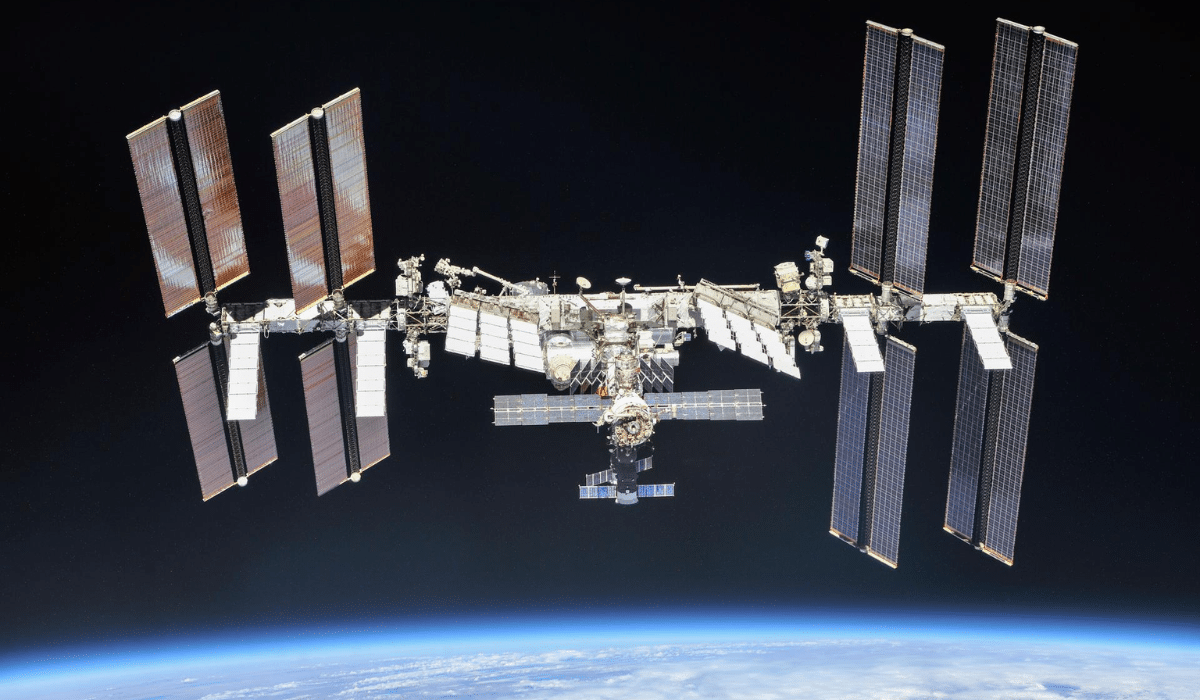
NASA retiring International Space Station 2030 is now official, marking the end of humanity’s most ambitious orbital laboratory after more than three decades of groundbreaking scientific achievements. The space agency confirmed plans to decommission the iconic ISS and transition toward commercial space stations that will reshape the future of low Earth orbit research.
ISS Retirement Timeline Confirmed
The ISS retirement timeline has been finalized, with all five international partner agencies—NASA, Canadian Space Agency (CSA), European Space Agency (ESA), Japan Aerospace Exploration Agency (JAXA), and Russia’s Roscosmos—committing to operate the station through 2030. According to NASA’s official transition plan, the NASA space station transition outlines a controlled ISS deorbit plan that will safely guide the 430,000-kilogram structure into a remote area of the Pacific Ocean.
NASA selected SpaceX to develop the SpaceX deorbit vehicle, officially called the U.S. Deorbit Vehicle (USDV), which will execute the final deorbit maneuver. This specialized spacecraft addresses technical limitations of existing propulsion systems and ensures the space station decommission meets U.S. Government safety standards requiring less than 1-in-10,000 likelihood of public risk from debris.
Why NASA Chose Deorbit Over Alternatives
The space agency evaluated multiple options before finalizing the deorbit strategy. Boosting the ISS to a higher orbit would require 760 m/s delta-V for a 10,000-year orbital lifetime compared to just 57 m/s for controlled deorbit. Additionally, orbital debris risk increases drastically above the current 415-kilometer altitude, with mean time between catastrophic impacts dropping from 51 years to less than four years at higher orbits.
Disassembly and return to Earth proved financially and logistically prohibitive. The station spans the size of a football field, required 27 Space Shuttle flights for assembly, and would need equivalent extravehicular activities to dismantle—a capability that no longer exists after the shuttle program’s retirement.
Commercial Space Stations Take Center Stage
The NASA space station transition strategy prioritizes private space stations as the future of orbital research. In December 2021, NASA awarded over $400 million to three companies for developing commercially owned and operated platforms through the Commercial LEO Destinations program. This approach follows the successful commercial cargo and crew transportation model pioneered by SpaceX and Boeing.
NASA’s Phase 2 partnership proposals, issued in September 2025, will provide funding for companies to complete critical design reviews and demonstrate stations capable of hosting four people for at least 30 days. The agency plans to become a customer purchasing services rather than operating its own facility, enabling focus on deep space exploration missions to the Moon and Mars.
Financial and Strategic Rationale
The ISS costs approximately $3 billion annually, consuming one-third of NASA’s human spaceflight budget. Transitioning to commercial space stations will reduce operational expenses while maintaining access to microgravity research capabilities. The 23-year continuous human presence aboard the ISS since 1998 has demonstrated the value of orbital laboratories, but the station’s primary structure faces limitations from dynamic loading during spacecraft dockings and orbital thermal cycling.
Environmental and Safety Considerations
During atmospheric re-entry, the space station will break apart in three stages: solar array and radiator separation, module and truss breakup, and final module fragmentation. Most hardware will burn up or vaporize from intense heating, while denser components like truss sections will survive to splash down in the targeted ocean area. Environmental impacts are expected to be minimal, with debris settling to the ocean floor in unpopulated regions.
The Path Forward
NASA’s vision for low Earth orbit research extends beyond 2030 through commercial partnerships. The agency has engaged with the Smithsonian National Air and Space Museum to preserve smaller ISS components for historical significance. Meanwhile, the focus shifts to Artemis missions at the Moon and eventual human exploration of Mars, building on decades of research and technology development achieved aboard the International Space Station.
The NASA retiring International Space Station 2030 plan represents not an ending, but a transformation—from government-operated facilities to a robust commercial marketplace where private space stations enable continued scientific advancement while freeing resources for humanity’s next giant leap into deep space.