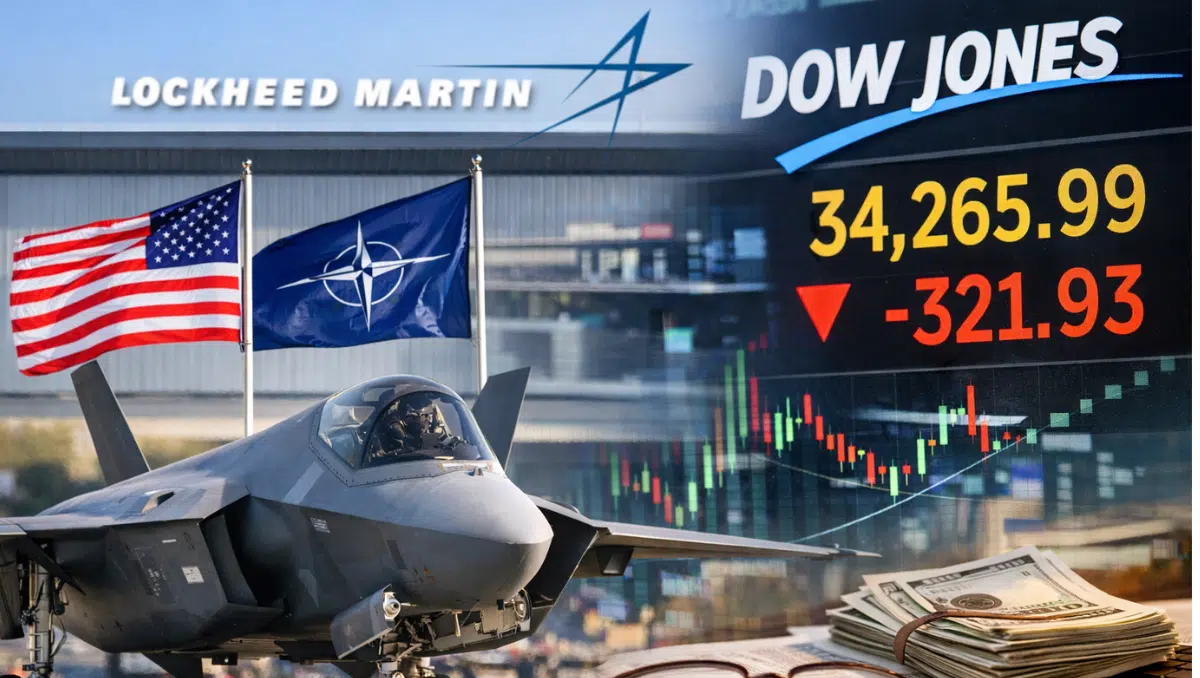
Investors tracking lockheed martin stock are not just watching a defense contractor. They are watching a barometer of US military policy, global security risks, and institutional capital allocation. When the stock moves, it often signals more than a quarterly earnings shift. It reflects changes in defense budgets, geopolitical posture, and even broader market direction through the Dow Jones.
Here is what is driving the current narrative and why it matters.
What Happened
Lockheed Martin shares have been closely monitored amid renewed focus on US defense spending and rising geopolitical tensions. As one of the largest defense contractors to the US Department of Defense, Lockheed Martin is deeply tied to Pentagon contracts and long-cycle military procurement programs.
Movements in the stock are frequently linked to:
- Congressional military budget negotiations
- Updates on major programs like the F-35
- Earnings guidance and defense contractor earnings outlook
- Global escalation events impacting NATO defense spending
Because the company is also a component of the Dow Jones, any meaningful shift in its valuation influences broader industrial sector performance. When defense sector stocks rally, they can provide support during broader market uncertainty. When they weaken, they often reflect budget concerns or policy risk.
The Structural Context Behind Lockheed Martin Stock
To understand lockheed martin stock, investors must look beyond daily price changes.
The US military budget operates on multi-year cycles. Major weapons systems such as the F-35 program involve long-term contracts, maintenance agreements, and international partnerships. That creates predictable revenue streams but also heavy dependence on federal appropriations.
If Congress signals higher defense allocations, Lockheed Martin shares typically benefit. If fiscal tightening or deficit reduction becomes a priority, defense contractors face margin and backlog pressure.
This dynamic also shapes performance relative to spy stock, which tracks the broader S&P 500. During periods of geopolitical stress, defense stocks sometimes outperform broader market indices. However, in risk-on rallies driven by technology or consumer growth, Lockheed Martin may lag.
Meanwhile, comparisons with palantir stock highlight a structural difference inside the defense ecosystem. Palantir represents defense-oriented AI and data analytics exposure, while Lockheed Martin reflects hardware-heavy aerospace and weapons manufacturing. Investors often rotate between these models depending on where they see future Pentagon priorities.
For those actively researching sector rotation strategies, advanced analytics platforms and screening tools can help identify capital flows between defense contractors and AI-driven firms. A detailed breakdown of research platforms is available in this guide to the best AI tools for stock market research, which explains how institutional-grade analysis is increasingly shaping retail strategy.
Impact on Investors and the Broader Market
Lockheed Martin stock affects multiple layers of the market:
Retail Investors
Defense stocks are often viewed as stability plays during geopolitical uncertainty. However, they are also exposed to headline risk. A shift in US foreign policy or military engagement strategy can change investor sentiment quickly.
Institutional Portfolios
Large pension funds and ETFs allocate to defense through sector funds and through broad market vehicles like spy stock. If defense stocks outperform, sector weighting increases inside index products.
Dow Jones Performance
As a Dow component, Lockheed Martin can influence industrial sentiment. If defense shares rally while technology weakens, the Dow may diverge from growth-heavy indices.
Sector Peers
Movements in Lockheed Martin often spill over into Raytheon stock and Northrop Grumman shares. Analysts frequently assess defense contractor earnings in clusters, especially during budget season.
What Happens Next
The forward outlook for lockheed martin stock depends on three primary forces.
First, US defense spending trajectory. If lawmakers continue prioritizing military readiness amid global tensions, backlog growth could remain strong.
Second, geopolitical escalation risk. Rising NATO defense spending or expanded Indo-Pacific deployments would support demand for aerospace systems.
Third, capital market conditions. If interest rates stabilize and institutional investors rotate into industrial names, defense sector stocks may gain renewed momentum. However, if deficit pressures intensify and fiscal tightening becomes central to policy debates, military budget growth could slow.
Investors should also watch how Lockheed Martin performs relative to palantir stock. If Pentagon investment shifts toward AI, cyber, and software modernization, capital may rotate into defense-tech names instead of traditional aerospace contractors.
In short, lockheed martin stock is not just a corporate story. It is a policy signal, a geopolitical indicator, and a reflection of how markets price national security risk. The next phase will be shaped not only by earnings reports but by Washington’s budget priorities and the global security environment.
Sources
- US Department of Defense official budget releases
- Lockheed Martin investor relations earnings reports
- SEC filings (10-K, 10-Q) for Lockheed Martin