Introduction
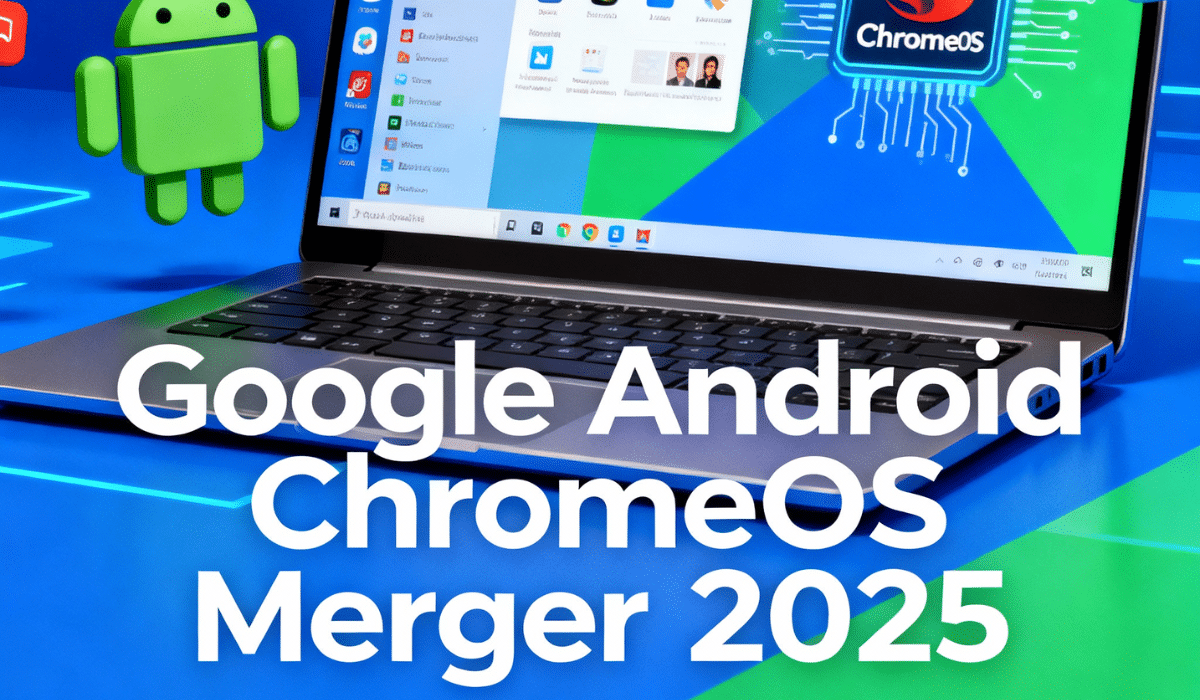
The Google Android ChromeOS merger has been officially confirmed at Qualcomm’s Snapdragon Summit 2025 in Maui, Hawaii, marking a revolutionary shift in personal computing. Google’s Senior Vice President Rick Osterloh and Qualcomm CEO Cristiano Amon delivered the strongest confirmation yet of plans to create a unified operating system for smartphones and PCs, with the new platform expected to launch in 2026.
Key Points
- Official confirmation at Snapdragon Summit 2025 by Google’s Rick Osterloh and Qualcomm’s Cristiano Amon
- 2026 launch timeline announced by Android chief Sameer Samat for the unified platform
- Qualcomm CEO endorsement – Amon calls the system “incredible” after experiencing it firsthand
- Gemini AI integration planned across the merged platform for enhanced productivity
- Native Android app support coming to PC form factor without emulation requirements
Table of Contents
Android PC 2025 Vision Becomes Reality
The unified platform represents Google’s most ambitious attempt to challenge Microsoft’s Windows dominance and Apple’s macOS ecosystem. During the Snapdragon Summit keynote presentation, Rick Osterloh explained Google’s strategy: “In the past, we’ve always had very different systems between what we’re building on PCs and what we’re building on smartphones, and we’ve embarked on a project to combine that”.
This technological convergence mirrors recent innovations in wearable technology, similar to how companies are integrating advanced features into everyday devices, as seen in developments like smart glasses with AR capabilities that bridge the gap between mobile and immersive computing experiences.
Snapdragon Summit Breakthrough Announcement
Qualcomm CEO Cristiano Amon’s enthusiastic response provided unprecedented third-party validation of the merger project. “I’ve seen it, it is incredible,” Amon told the Snapdragon Summit audience. “It delivers on the vision of convergence of mobile and PC. I can’t wait to have one”. This endorsement carries significant weight given Qualcomm’s position as a leading supplier of ARM-based processors for both mobile devices and Windows laptops.
The timing aligns perfectly with Qualcomm’s announcement of new Snapdragon X2 Elite and Elite Extreme processors designed for laptops, suggesting the desktop Android system will launch optimized for Qualcomm’s latest silicon.
Google Gemini AI PC Integration Strategy
Google’s Gemini AI PC integration represents a cornerstone of the unified platform strategy. Osterloh outlined plans to bring “Gemini models, bringing the assistant, bringing all of our applications and developer community into the PC domain”. This AI-first approach positions Google to compete directly with Microsoft’s Copilot+ PCs and Apple’s machine learning capabilities.
The unified AI experience addresses a critical gap in cross-device computing, where users currently struggle with disconnected experiences between mobile and desktop environments. By building ChromeOS on Android’s foundation, Google engineers can deliver consistent AI functionality without duplicating development efforts across platforms.
Qualcomm Android Laptop Hardware Partnership
The collaboration between Google and Qualcomm extends beyond software optimization to hardware integration. While specific partnership details remain undisclosed, Qualcomm’s development of laptop-focused processors like the Snapdragon X2 series suggests deep collaboration on the Qualcomm Android laptop ecosystem.
This partnership mirrors successful industry collaborations, similar to recent major technology alliances in the semiconductor space, such as strategic partnerships between major chipmakers that are reshaping the computing landscape through combined expertise and resources.
ChromeOS Integration Preserves User Experience
Contrary to speculation about ChromeOS disappearing, Google’s Sameer Samat emphasized continuity: “If you think about the laptop form factor, we’ve had ChromeOS for a long time, and we’re super committed to that platform… the ChromeOS experience will remain, but its baseline technology will switch to running on Android”.
This ChromeOS integration approach preserves the simplicity and speed that users love while adding Android’s massive app ecosystem and advanced AI capabilities. The strategy represents evolution rather than replacement, maintaining ChromeOS’s educational market strength while expanding into enterprise and consumer segments.
Market Impact and Competition Response
The merger positions Google to challenge Windows’ approximately 70% global market share by leveraging Android’s 2.5 billion active users. Unlike previous failed convergence attempts, Google’s approach builds on proven foundations rather than creating entirely new paradigms.
The strategy also addresses growing user frustration with Windows’ privacy concerns and forced features, potentially creating an opening for alternatives. By 2026, Google aims to offer seamless integration between Android phones, tablets, and PCs that neither Windows nor macOS can match within Google’s ecosystem.
Conclusion
The Google Android ChromeOS merger represents a pivotal moment in personal computing, promising to deliver seamless integration between mobile and desktop experiences by 2026. With Qualcomm’s strong endorsement and Google’s commitment to preserving the best aspects of both operating systems, this unified platform could finally challenge Windows’ long-standing PC dominance while delivering the AI-powered computing experience users increasingly demand.
FAQs
Q1. When will the Google Android ChromeOS merger be available?
A: Google’s Android chief Sameer Samat confirmed the unified platform will launch in 2026, with development currently underway at the Snapdragon Summit 2025.
Q2. Will ChromeOS disappear after the merger?
A: No, the ChromeOS experience will remain intact but will run on Android’s technical foundation instead of its current Linux base, preserving user familiarity while adding new capabilities.
Q3. Which companies are partnering with Google for Android PCs?
A: Qualcomm is the primary hardware partner, with CEO Cristiano Amon confirming he has experienced the unified system and calling it “incredible”.
Q4. What AI features will be included in the merged platform?
A: Google plans to integrate Gemini AI models, Google Assistant, and the full Android AI stack across the unified platform for enhanced productivity and cross-device functionality.