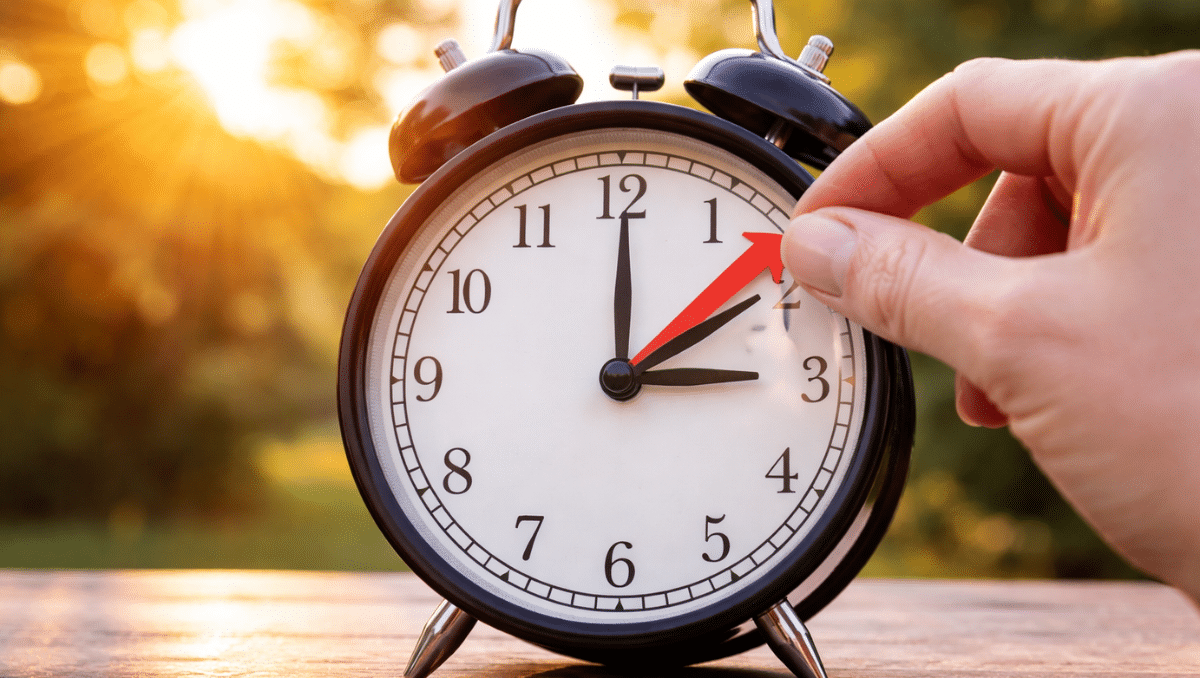
When Is Daylight Savings 2026?
Daylight Savings 2026 in the United States begins on Sunday, March 8, 2026, and ends on Sunday, November 1, 2026. During this period, clocks are adjusted forward in spring and back again in fall to make better use of daylight during the longer days of the year.
At 2:00 a.m. local time on March 8, 2026, clocks move forward one hour to 3:00 a.m., marking the start of Daylight Saving Time (DST). Later in the year, on November 1, 2026, clocks move back one hour at 2:00 a.m., returning to standard time.
This change affects millions of people across the United States, Canada, and several other regions that observe DST.
What Is Daylight Saving Time?
Daylight Saving Time (DST) is a seasonal time adjustment designed to extend evening daylight during spring and summer months.
Instead of the sun setting earlier in the evening, clocks are shifted forward by one hour so people can take advantage of more daylight after typical working hours.
The system generally follows this schedule:
- Spring: clocks move forward one hour (“spring forward”)
- Fall: clocks move back one hour (“fall back”)
While the change only shifts time by an hour, it can impact sleep schedules, business hours, transportation systems, and international communications.
Daylight Savings 2026 Schedule
| Event | Date | Time Change |
|---|---|---|
| DST Begins | March 8, 2026 | Clocks move forward 1 hour |
| DST Ends | November 1, 2026 | Clocks move back 1 hour |
Most devices such as smartphones, computers, and smartwatches automatically update to the new time.
Countries That Observe Daylight Saving Time
Not every country uses DST. The practice is common in some regions but absent in others.
Countries that follow DST
- United States
- Canada
- United Kingdom
- European Union countries
- Australia (some regions)
- New Zealand
Countries that do not follow DST
- India
- Japan
- China
- Singapore
- Most countries near the equator
India uses Indian Standard Time (IST) throughout the year, meaning clocks do not change seasonally.
Why Daylight Saving Time Exists
DST was introduced to make better use of natural daylight and reduce energy consumption.
Some commonly cited benefits include:
- More daylight during evening hours
- Potential energy savings
- Increased outdoor activity and commerce
- Reduced traffic accidents during darker evening hours
However, the practice has also faced criticism because studies show mixed results regarding energy savings and health impacts.
Common Effects of the Time Change
Even though the shift is only one hour, people often experience short-term adjustments.
Common effects include:
- Temporary sleep disruption
- Changes in productivity
- Increased fatigue during the first few days
- Adjustments in international schedules
Many experts recommend gradually adjusting sleep schedules a few days before the change to minimize disruption.
Will Daylight Saving Time Be Permanent?
In recent years, lawmakers in the United States have debated making DST permanent. Some proposals aim to eliminate the biannual clock changes, but as of 2026, the traditional schedule is still in effect.
If legislation changes in the future, the U.S. may adopt a permanent time system, but no nationwide change has been implemented yet.
Final Thoughts
Daylight Savings 2026 begins on March 8, 2026, when clocks move forward one hour, and ends on November 1, 2026, when clocks return to standard time. The time shift continues to affect daily routines, global business schedules, and seasonal daylight patterns across many parts of the world.
For people in countries like India that do not observe DST, the change mainly affects international meetings, markets, flights, and communication with countries that follow the system.